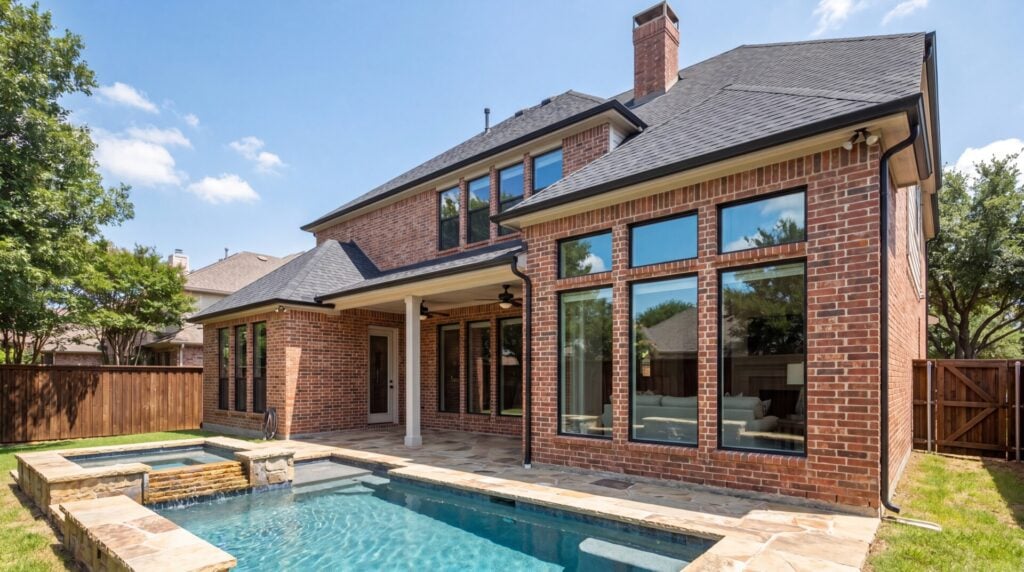

Homes across Frisco and Plano were built during the same construction booms, with most current housing stock dating from the early 2000s onward. That means a huge percentage of homes in both cities are now hitting the age where builder-grade windows start failing. Plano in particular has a deep inventory of homes built 20+ years ago, which is why we see steady replacement demand throughout neighborhoods like West Plano, Willow Bend, and the Legacy area. In Frisco, communities like Stonebriar, Phillips Creek Ranch, and Newman Village are reaching the same tipping point.
The North Texas climate accelerates window wear. Triple-digit summers, surprise hailstorms, sudden 50°F temperature swings in spring, and persistent humidity all put stress on seals, frames, and glass. If your windows are 15 to 25 years old, here are four warning signs you shouldn’t ignore.
Sign 1: Drafts and Air Leaks Around the Frame
Drafts mean your seals have failed. Over time, weather stripping wears out, caulk shrinks and cracks, and aluminum frames expand and contract enough to leave permanent gaps. Once cool air can escape and hot Texas air can sneak in, your comfort and energy bills both take a hit.
Builder-grade windows from the early 2000s are particularly prone to this. Many were installed with aluminum frames that conduct heat directly into your home, and the original sealants weren’t engineered for two decades of Texas UV.
How to test for drafts:
- On a hot afternoon, run your hand around the perimeter of the window frame. If you feel warm air coming through, the seal is compromised.
- During winter, do the same test. A cold draft confirms the issue.
- Light a candle or hold a thin piece of tissue near the frame edges. Flickering or movement signals air movement where there shouldn’t be any.
- Inspect the exterior frame for chipping paint, swelling, rust streaks, or visible gaps between the frame and brick or siding.
Drafts can sometimes be improved with new weather stripping or fresh caulk, but if the frame itself is warped or the glass-to-frame seal has failed, replacement is the only real fix.
Sign 2: Foggy Glass or Moisture Between the Panes
If you can see fog, condensation, or a hazy film between the panes of a double-pane window, the insulating seal has broken. Modern double-pane windows trap argon gas between the panes to slow heat transfer. Once the seal fails, that gas escapes, moisture seeps in, and the window loses most of its insulating value.
You can’t fix this with cleaning. The fog is on the inside surfaces of the glass, sealed behind the frame. The only solutions are replacing the glass unit (called the IGU, or insulated glass unit) or replacing the entire window.
For Frisco and Plano homeowners, foggy windows are particularly worth addressing because:
- They signal the rest of your windows are nearing the same age and likely to fail soon
- They reduce visibility, especially noticeable on west-facing windows during sunset
- They hurt curb appeal, which matters in two of the hottest resale markets in North Texas
- They reduce energy efficiency at the worst possible time of year
According to the U.S. Department of Energy, heat gain and heat loss through windows are responsible for 25–30% of residential heating and cooling energy use. Failed seals push that number even higher.
If two or more windows in your home are fogging, it’s time for a full assessment rather than one-off repairs.
Sign 3: Windows That Stick, Won’t Open, or Won’t Lock
Windows that won’t open, stick halfway, or have locks that no longer line up aren’t just annoying. They’re a safety issue.
In bedrooms, an inoperable window can become a serious problem in a fire. International building codes require egress windows in sleeping areas precisely because they may be the only escape route. If your bedroom window takes two people to force open, that’s not a window problem you can put off.
Common causes of stuck or misaligned windows in Frisco and Plano homes:
- Warped frames from years of expansion and contraction in Texas heat
- Foundation settling, which is common across North Texas’s clay-heavy soil and can pull window openings out of square
- Worn balance systems in older double-hung windows (the internal springs or cords that hold the sash in place)
- Painted-shut sashes from previous repaint jobs
- Failed hardware like corroded locks or stripped operator gears on casement windows
If your locks don’t engage smoothly, the frame is likely no longer square. Once a frame loses its shape, no amount of hardware adjustment will bring it back. Replacement is the right call.
Sign 4: Higher Energy Bills With No Change in Habits
If your electric bill has crept up over the last few summers but your thermostat settings and household routines haven’t changed, your windows are a likely suspect. The U.S. Department of Energy estimates that ENERGY STAR certified windows save the average homeowner 12% on energy bills, with even larger savings when replacing single-pane or failed double-pane units.
In Frisco and Plano, where cooling season runs from April through October, inefficient windows force your AC to run longer cycles. That shows up as:
- Higher monthly electric bills, even when usage habits haven’t changed
- Rooms that feel hot in the afternoon despite the AC running
- Noticeable temperature differences between rooms (west-facing rooms running 5–10°F warmer)
- AC units that short-cycle or run nearly continuously during peak heat
The afternoon hand test: On a sunny 95°F+ day, stand near a west-facing window between 3 and 6 PM. Hold your hand 6 inches from the glass. If you feel radiating heat, your window has poor solar heat gain performance and is part of the reason your AC is working overtime.
Modern replacement windows with Low-E coatings and a Solar Heat Gain Coefficient (SHGC) below 0.30 dramatically reduce this radiant heat. The energy savings often offset a meaningful portion of the replacement investment over time.
What Today’s Replacement Windows Actually Solve
The good news is that windows have come a long way since the builder-grade units installed in most Frisco and Plano homes. Modern replacement windows address every issue on this list with engineering that simply didn’t exist 20 years ago.
Vinyl windows remain the most popular choice in both cities, offering excellent insulation, minimal maintenance, and UV-stable frames designed for Texas heat. Fiberglass delivers superior strength and thermal performance for homeowners who want long-term durability. Aluminum-clad wood offers a premium aesthetic for custom homes and high-end neighborhoods.
Whatever the frame material, modern windows include:
- Multi-chamber frames that block heat transfer
- Low-E glass coatings that reflect infrared heat
- Argon gas fills between panes for better insulation
- Improved sealing technology that resists Texas humidity
- Hardware engineered for smooth operation over decades, not years
These upgrades fix the root causes of drafts, fogging, sticking, and high energy bills, rather than just patching symptoms.
Frequently Asked Questions
Should I repair my windows or replace them?
Repair makes sense for isolated, single-window problems like a broken pane, a stripped lock, or worn weather stripping on an otherwise solid window. Replacement is the better long-term investment when you see multiple signs of failure across multiple windows, when the frames themselves are warped or damaged, or when your windows are 15+ years old. A free in-home assessment can tell you definitively which path makes sense for your home.
What window type works best for Frisco and Plano heat?
For most homes in both cities, vinyl windows with Low-E glass and an SHGC below 0.30 deliver the best balance of performance and value. Fiberglass is the next step up if budget allows. The single most important factor isn’t the frame material though. It’s the glass package and quality of installation.
Do I have to replace all my windows at once?
No. Many Frisco and Plano homeowners replace windows in phases, especially when budget is a factor. The smart approach is to prioritize by severity and sun exposure: start with windows showing the worst signs (failed seals, drafts, fogging) and west or south-facing windows that take the brunt of Texas sun. A whole-home replacement typically delivers better per-window pricing and a consistent look, but a phased approach is a legitimate strategy. We can help you build a plan that fits your budget and tackles the highest-impact windows first.
How long does window replacement take?
Most full-home projects take 1–3 days of on-site installation once the windows arrive. Manufacturing lead times typically run 3–4 weeks from order to install date, so plan ahead if you’re hoping to have new windows before the next peak summer or winter season.
Schedule Your Free In-Home Assessment
If you noticed your windows in any of these four signs, the next step is a proper assessment. Photos and online estimates can only tell you so much. Window sizes, frame condition, brick details, sun exposure, and your specific home’s construction all affect what’s actually right for your project.
Schedule a free in-home consultation and we’ll inspect your windows, identify which ones need replacement (and which might not), and give you a precise, no-pressure quote tailored to your Frisco or Plano home.