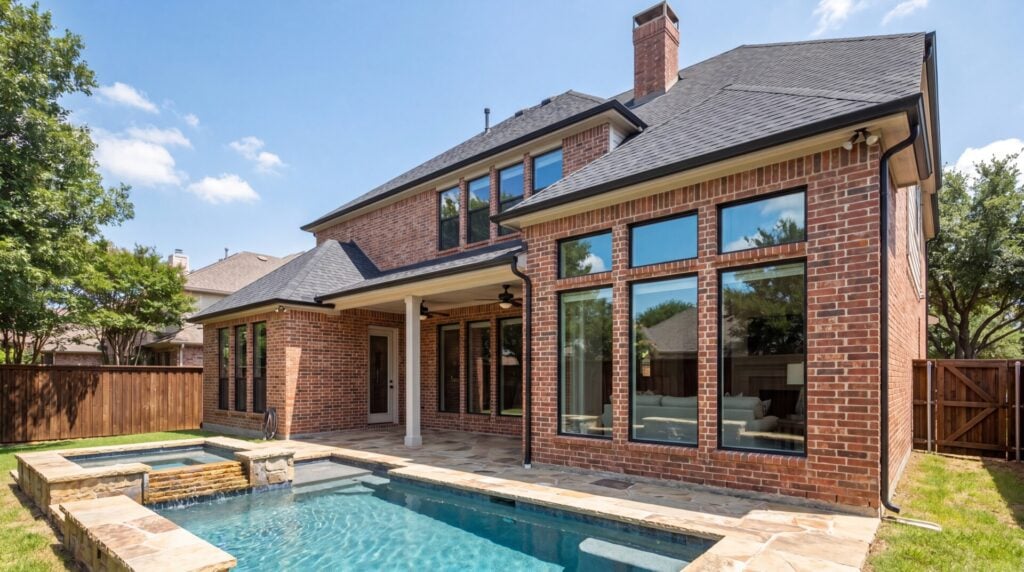
Choosing the right windows matters, but choosing the right installer matters just as much. A premium window installed poorly will underperform a basic window installed correctly. In North Texas, where wide temperature swings, clay soil movement, brick veneer construction, and intense UV all stress every installation, the quality of the install genuinely determines whether your new windows perform for 25 years or start failing in five.
The challenge is that window installation is a relatively unregulated trade. Anyone with a truck and a caulk gun can call themselves an installer. This guide walks through the questions, red flags, and credentials that separate true professionals from shops that will leave you with leaks, drafts, and warranty disputes.
Why Installer Quality Matters More in Frisco and Plano Than Most Places
Both cities present specific installation challenges that most installers don’t fully account for:
- Brick veneer construction is standard across both Frisco and Plano. Installing windows in brick requires specific weatherproofing techniques that differ from siding or stucco. Done wrong, water finds its way behind the brick and rots the framing within years.
- North Texas clay soil shifts seasonally with rainfall and drought cycles. Foundations move, and window openings move with them. Installations need to allow for this without binding the frame.
- Wide temperature swings (50°F in a single day is common in spring) demand proper allowance for thermal expansion. Frames installed too tight will warp; frames installed too loose will leak.
- Hard summer rains combined with brick construction make every flashing, sealing, and caulking decision a potential leak source.
- High UV exposure punishes any sealant or weather barrier that wasn’t applied to specification.
A great installer accounts for all of this. A poor installer hits the easy ones and shortcuts the rest. The difference shows up two to five years later when your windows start failing and the install warranty has quietly expired.
The 10 Questions to Ask Every Installer Before You Hire
Use these in your consultation. The answers reveal more than reviews or sales pitches ever will.
1. What installation standards do you follow?
The credible answer references industry standards like AAMA (now FGIA) installation guidelines. These are the published professional standards for window and door installation in North America. An installer who can name them and explain how they apply to your project is operating at a real professional level. An installer who deflects (“we just install them the right way”) is telling you they don’t have a defined process.
2. How do you weatherproof around brick veneer?
For Frisco and Plano homes, this is the single most important technical question. The right answer involves specific materials (flexible flashing tape, butyl sealants, proper caulk profiles) and a defined sequence (inspect, prep, flash, set, seal, finish). If the answer is vague or rushed, water intrusion is in your future.
3. Do you use foam insulation or flashing around the window perimeter and cavity?
Quality installations include low-expansion foam insulation around the entire window perimeter and inside the cavity between the rough opening and the window frame. This seals against air infiltration and dramatically improves energy performance. Many lower-tier installers skip this step entirely or use only caulk, which is not the same thing.
4. How do you handle frames that are out of square?
In older Frisco and Plano homes, foundation settlement often pulls window openings out of square. A quality installer shims and adjusts to install the window level and plumb within an out-of-square opening, then seals appropriately. A poor installer either forces the window into the existing opening (causing operation problems and seal stress) or refuses the project entirely.
5. What’s your warranty on labor?
Industry-standard labor warranties on quality installations run 1 to 3 years, with the best installers offering longer coverage. The window manufacturer covers the product. The installer covers the labor. If an installer’s labor warranty is 90 days or they’re vague about coverage, that tells you exactly how long they expect their work to last.
6. Are you licensed and insured?
Texas doesn’t require window installers to hold a state license, but installers must carry general liability insurance and workers’ compensation. Ask for proof of both. If a worker gets injured on your property and the installer isn’t insured, you can be held liable. If they damage your home and aren’t insured, you have no recourse.
7. Will the same crew do every window in my project?
Quality installers use consistent crews. Lower-tier operations rotate subcontractors, which means inconsistent quality across the windows in your home. The first three windows might be perfect while the last seven are rushed. Get this in writing.
8. Do you remove the old windows and dispose of debris?
Standard for legitimate installers, surprisingly often missing from cut-rate quotes. Confirm in writing that haul-away and cleanup are included. If they’re not, you’re paying separately or doing it yourself.
9. How do you handle issues discovered during install?
Rot, damaged framing, or water damage hidden behind old windows are common in 15-25 year old Frisco and Plano homes. Ask specifically: what’s your process when you find rot? What’s the typical additional cost? Do you stop and call me before doing extra work? An installer with a clear answer has handled this before. An installer who acts surprised by the question hasn’t.
10. Can I see references from recent jobs in Frisco or Plano?
Recent, local references matter more than star ratings online. Ask for 3 references from projects completed in the last 6 months in your area. A quality installer provides them readily. A poor installer hedges, delays, or offers only old projects.
Red Flags That Should End the Conversation
Some signs are obvious enough that you should walk away regardless of the price:
- High-pressure sales tactics, especially “today only” pricing or pushing for a same-day signature
- No physical address or only a P.O. Box on their materials
- Door-to-door solicitation, particularly after storms or in newer neighborhoods
- Requests for large upfront payments before any work begins. Industry standard is a deposit (typically 50%) with the balance due on completion
- Inability or refusal to provide proof of insurance
- Vague pricing that doesn’t break down materials versus labor
- No written contract or a contract written in vague terms
- Disparaging competitors rather than focusing on their own work and credentials
- No physical samples of the actual windows they plan to install
- Pressure to sign before measuring your windows or assessing your home
What a Quality Installation Process Actually Looks Like
Beyond the questions, here’s what a real installation should include from start to finish:
Before the project:
- Detailed in-home assessment with actual window measurements (not visual estimates)
- Written quote with itemized materials, labor, and any additional services
- Clear timeline including manufacturing lead time (typically 3-4 weeks) and install dates
- Explanation of what to expect during the install (where they’ll work, how long, what disruption to expect)
During installation:
- Each opening inspected and prepped before the new window is placed
- Old caulk, debris, and any rot or damaged materials fully removed
- Proper flashing and weather barriers installed
- Window shimmed level and square, with allowance for thermal expansion
- Foam insulation applied around the window perimeter and cavity
- Interior and exterior caulk lines applied cleanly and to manufacturer specification
- Each window tested for smooth operation before moving on
After the project:
- Complete cleanup including haul-away of old windows and debris
- Walkthrough with the homeowner to verify each window
- Written documentation of the warranty (both product and labor)
- Manufacturer registration completed on your behalf for product warranties
The Importance of Local Experience
A great installer from another region isn’t automatically a great installer in Frisco and Plano. North Texas has specific challenges that take local experience to navigate:
- Knowing which brick types are common in which neighborhoods and how they require different weatherproofing approaches
- Understanding how clay soil movement affects window openings differently in different Frisco subdivisions
- Anticipating the kinds of hidden damage common in 15-25 year old homes built during the 2000s housing boom
- Having relationships with quality manufacturers that ship to North Texas with reliable lead times
- Understanding which window styles and colors fit the architectural patterns common to local HOAs
An installer with extensive Frisco and Plano experience has seen these things hundreds of times. An installer parachuting in from another market is learning on your project.
Pricing: What Should a Quality Install Actually Cost?
Cheap installation quotes often mean shortcuts that show up years later. Industry-standard pricing for quality installations in Frisco and Plano typically includes:
- Vinyl windows installed: $600 to $1,500 per window, with most projects averaging around $750
- Fiberglass windows installed: $900 to $2,500 per window
- Aluminum-clad wood windows installed: $1,800 to $5,500+ per window
- Full-home replacements (10-20+ windows): $16,500 to $25,000+
If a quote comes in significantly below these ranges, ask why. Either the windows themselves are builder-grade quality, the installation is skipping critical steps, or both. Cut-rate installers can’t operate at industry pricing because they’re cutting somewhere.
Frequently Asked Questions
How long should a quality window replacement take?
For most full-home projects in Frisco and Plano, installation takes 1-3 days on-site once the windows arrive. The full timeline including manufacturing is typically 3-4 weeks from contract to installation. Projects much faster than this often signal shortcuts.
Should I get multiple quotes?
Yes, ideally 2-3 quotes from different installation companies. Compare not just price but the level of detail in each quote, the questions each installer asks, and how thoroughly they assessed your home. The most expensive isn’t always the best, and neither is the cheapest. Quality installers fall in a similar pricing range because they’re doing the work to industry standards.
What’s the difference between an installer and a window company?
A window company sells windows. An installation company installs them. Some businesses do both, some specialize in one or the other. For most Frisco and Plano homeowners, working with a company that both sells and installs (so accountability lives in one place) tends to deliver better results than splitting the project across two vendors.
How do I verify an installer’s insurance?
Ask for a certificate of insurance (COI) directly from their insurance provider, not just a verbal claim. Quality installers provide this without hesitation. The COI lists the insurance company, policy numbers, coverage limits, and expiration dates. Anything less is unverified.
Are online reviews reliable for choosing an installer?
Reviews are helpful but not the whole picture. Look for patterns rather than individual reviews. A few negative reviews among many positives is normal. Recurring complaints about the same issue (delays, leaks, communication, warranty disputes) is a red flag. Reviews from the past 12 months matter more than older ones.
Schedule a Free In-Home Consultation
The best way to evaluate any installer is to invite them into your home and see how they approach the work. Watch how they measure. Listen to how they answer questions. Notice whether they take time to inspect your existing windows or rush straight to a quote.
Schedule a free in-home consultation and we’ll measure your windows, assess your home’s specific conditions, walk you through what we’d recommend and why, and answer any of the questions in this guide. No pressure, no obligation, just clear information you can use to make a smart decision for your Frisco or Plano home.