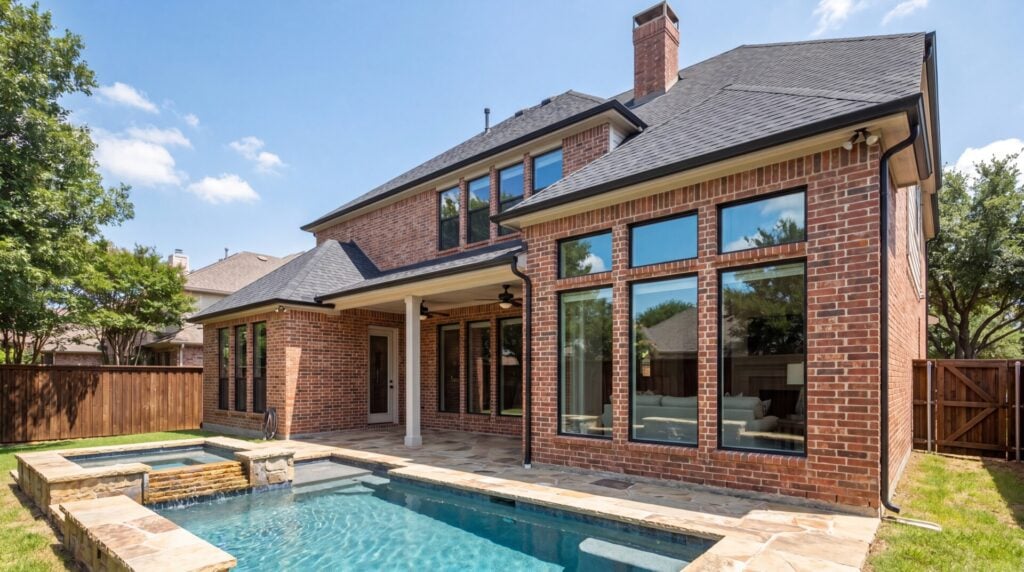
If you’re a Frisco homeowner shopping for replacement windows, energy efficiency probably tops your list. With cooling season running April through October and summer afternoons regularly pushing past 100°F, the right windows can drop your monthly electric bill noticeably while making your home actually comfortable during peak heat. The wrong ones leave you with the same problems you had before.
This guide walks through the specs, features, and decisions that separate genuinely energy-efficient windows from ones that just claim to be. The same principles apply if you’re in Plano or anywhere across North Texas, but Frisco’s specific climate, sun exposure patterns, and housing stock shape what works best.
Why Energy Efficiency Matters More in Frisco Than Most Places
Frisco’s climate is one of the most demanding in the country for windows. We get:
- 6+ months of cooling season, with the AC running hard from late April through October
- 100°F+ summer afternoons that punish west-facing windows
- Wide temperature swings, sometimes 50°F in a single spring day, that stress window seals
- High UV exposure that degrades cheap window materials within years
- Persistent humidity that finds any gap or sealing failure
Most homes in Frisco were built between the early 2000s and 2010, when builder-grade aluminum and basic vinyl windows were standard. Those windows weren’t designed for this climate’s long-term demands. After 15-25 years, you’re often paying the cost of inefficient windows in higher energy bills, hot upstairs rooms, and an HVAC system working overtime.
Energy-efficient replacement windows fix this at the root rather than masking it with bigger AC units or temporary fixes.
The Window Ratings That Actually Matter
Every replacement window worth considering comes with a National Fenestration Rating Council (NFRC) label. This label has four key numbers. Here’s what they mean and which ones matter most for Frisco.
U-Factor (Most Important for Insulation)
What it measures: How well the window keeps heat from escaping or entering through the frame and glass. Lower is better.
Plain English: This is your insulation number. A lower U-factor means the window is doing its job of keeping outdoor temperatures from affecting indoor comfort.
What to look for in Frisco: U-factor of 0.30 or below. For top performance, aim for 0.25 or lower.
Solar Heat Gain Coefficient or SHGC (Most Important for Texas Heat)
What it measures: How much of the sun’s heat passes through the glass into your home. Lower is better.
Plain English: This is your “how much will this window heat up my house in summer” number. A window with high SHGC turns your living room into a greenhouse by 4 PM. A window with low SHGC keeps that solar heat outside.
What to look for in Frisco: SHGC of 0.25 or below. This is the single most important rating for our climate. Pay attention to this one more than any other.
Visible Transmittance or VT
What it measures: How much natural light comes through the glass. Higher = brighter rooms.
Plain English: This is your daylight number. It’s a preference issue more than a performance one. Some homeowners want bright rooms, others want softer light.
What to look for in Frisco: VT between 0.40 and 0.60 is a good balance. Lower if you want softer light for north-facing rooms, higher if you want maximum brightness.
Air Leakage or AL
What it measures: How much air sneaks through the window when closed. Lower is better.
Plain English: This is your “how drafty is this window” number. Quality windows have low air leakage ratings.
What to look for in Frisco: AL of 0.30 or below, though most quality windows perform well here.
The Quick Cheat Sheet
For most Frisco homes, the ideal window has:
- U-factor: 0.30 or below
- SHGC: 0.25 or below
- VT: 0.40 to 0.60
- AL: 0.30 or below
- ENERGY STAR certified for the South-Central climate zone
If a window meets all five, you’re looking at a genuinely energy-efficient unit.
ENERGY STAR Certification for Our Climate Zone
Frisco sits in ENERGY STAR’s South-Central climate zone, which has specific performance requirements designed for hot-summer regions. Not every ENERGY STAR window qualifies for our zone. A window certified for the Northern zone might fail to perform here because it’s optimized for retaining heat rather than blocking it.
According to the U.S. Department of Energy, ENERGY STAR certified windows save homeowners roughly 12% on energy bills on average, with bigger savings when replacing older single-pane or builder-grade double-pane units.
Before you buy, verify the windows are certified for the South-Central zone specifically. The label or product spec sheet will say so.
The Glass Package: Where Energy Efficiency Actually Lives
Here’s something most homeowners don’t realize: the frame material gets all the attention, but the glass package determines 70-80% of a window’s energy performance. A premium frame with cheap glass underperforms a basic frame with quality glass.
For Frisco, your glass package needs three things working together.
1. Low-E Coating (Non-Negotiable)
Low-E (low emissivity) is an ultra-thin metallic coating applied to the glass that reflects infrared heat while still letting visible light pass through. In our climate, this is the single most important glass feature.
Different Low-E coatings are tuned for different climates. For Frisco, you want a Low-E formulation designed to block solar heat gain (sometimes called “solar control Low-E”), not the version designed to retain heat for cold climates.
2. Argon Gas Fill Between Panes
Quality double-pane windows have argon gas (denser than air) sealed between the panes. Argon slows heat transfer significantly compared to plain air. It’s a small upgrade in cost and a meaningful upgrade in performance.
Triple-pane windows with two argon gas chambers go even further, though triple-pane is usually overkill for Frisco unless you have specific noise concerns or extreme west-facing exposure.
3. Quality Spacer Between Panes
The spacer is the strip that holds the two glass panes apart and seals the gas between them. Older “aluminum spacer” technology conducts heat and causes condensation around window edges. Modern “warm-edge” or “stainless steel” spacers dramatically reduce this issue and extend the seal’s lifespan.
When comparing windows, ask specifically about the spacer technology. It’s a detail most salespeople won’t mention but it matters for long-term performance.
Frame Material: Which Works Best for Energy Efficiency
Three frame materials are relevant for Frisco replacement windows, each with different energy characteristics.
Vinyl has natural thermal break properties built into its multi-chamber construction, meaning it doesn’t conduct heat like aluminum. Premium vinyl paired with the right glass package delivers excellent energy performance at a strong price point. Installed cost typically runs $600 to $1,500 per window, with most projects averaging around $750.
Fiberglass offers similar thermal performance to vinyl with slightly better long-term stability because it expands and contracts at nearly the same rate as glass. This means seal stress is lower over time. Installed cost runs $900 to $2,500 per window.
Aluminum-clad wood offers premium aesthetics with good thermal performance, but the energy benefit comes mostly from the wood interior, not the aluminum exterior. Installed cost runs $1,800 to $5,500+ per window.
The frame to avoid: builder-grade aluminum. This is almost certainly what’s already in your home, and it’s the primary reason your house feels hot in summer. Aluminum without a thermal break conducts heat directly from the outside in. Replacing it is exactly why you’re shopping for new windows.
Installation Quality Determines Whether Any of This Works
You can buy the most energy-efficient window in the world and a bad installation will undermine all of it. In Frisco specifically, the install needs to account for:
- North Texas clay soil that shifts seasonally and can pull window openings out of square
- Brick veneer construction common in most Frisco homes, which requires foam insulation around the window perimeter and cavity to prevent air and water infiltration
- Wide temperature swings that demand proper allowance for thermal expansion in the frame
- High UV exposure that punishes any caulk or sealant that wasn’t applied to spec
- Hard summer rains that test every seal and sealing detail
The right installer will inspect each opening, prep it correctly, apply foam insulation around the window perimeter and cavity to seal against air and moisture, shim the window level and square, seal it with appropriate caulk and weather barriers, and verify operation before leaving. Skipping any of these steps creates the drafts, leaks, and seal failures that destroy energy performance within years.
Window Orientation: Spend Your Budget Strategically
Not every window in your home contributes equally to your energy bill. If budget is tight and you’re considering a phased approach, prioritize by exposure:
West-facing windows take the worst beating from afternoon sun and contribute most to summer cooling costs. These are your highest-priority replacements.
South-facing windows get sun most of the day but at less intense angles. Important but secondary to west exposure.
East-facing windows get morning sun, which is less intense than afternoon. Lower priority unless drafty or failing.
North-facing windows get the least direct sun and typically the least energy impact. Lowest priority, though still worth replacing if they’re failing.
For Frisco homeowners doing a phased replacement, starting with west and south-facing windows usually delivers the biggest comfort and energy improvement for the budget.
Questions to Ask Before You Buy
When you’re comparing quotes and products, these questions separate quality vendors from ones who’ll cut corners:
- Are these windows ENERGY STAR certified for the South-Central climate zone?
- What’s the U-factor and SHGC on the specific units you’re proposing?
- What Low-E coating is on the glass? Is it formulated for hot climates?
- Is the gas fill argon, and what spacer technology do you use?
- Do you apply foam insulation around the window perimeter and cavity during installation?
- What’s the warranty on the frames? On the glass seals? On the labor?
- Do you allow for thermal expansion during installation?
If a salesperson can’t answer these clearly, that’s a signal to keep shopping.
Frequently Asked Questions
What U-factor and SHGC should I look for in Frisco?
Aim for U-factor of 0.30 or below and SHGC of 0.25 or below. The SHGC matters more than U-factor in our climate because we’re fighting heat gain much more than heat loss. Lower numbers are better for both.
Are triple-pane windows worth it in Frisco?
For most Frisco homes, no. Double-pane windows with quality Low-E coating and argon gas already deliver excellent performance for our climate. Triple-pane adds meaningful cost and only delivers significant benefit in specific situations: extreme west-facing exposure, homes near very loud roads where you want noise reduction, or unusually demanding comfort requirements.
How much can energy-efficient windows actually save me?
The U.S. Department of Energy estimates ENERGY STAR windows save the average homeowner about 12% on energy bills, with bigger savings when replacing single-pane or older builder-grade double-pane windows. In Frisco specifically, savings tend to be on the higher end of that range because of our extended cooling season.
Should I prioritize windows or insulation upgrades first?
It depends on your home, but for most Frisco homes with original builder-grade windows, windows are the higher-impact upgrade. Windows are typically the weakest point in a home’s thermal envelope, especially when they’re 15-25 years old. An energy assessment can tell you definitively where your biggest losses are happening.
How long do energy-efficient windows last in Texas?
Premium vinyl windows last 20-25 years in Texas conditions. Fiberglass typically lasts 25-35 years. Both significantly outperform the builder-grade aluminum or first-generation vinyl that’s likely in your home now.
Schedule Your Free Energy Efficiency Assessment
Choosing the right energy-efficient windows starts with understanding where your current home is losing the most energy. Window sizes, sun exposure, brick details, existing frame condition, and your home’s specific orientation all affect which upgrades will deliver the biggest comfort and savings impact.
Schedule a free in-home energy efficiency assessment and we’ll walk through your Frisco home, identify where your biggest energy losses are happening, measure your windows, and give you a precise quote based on what your home actually needs. No pressure, no guesswork, just clear information you can use to make a smart decision.